
Quick Answer
The trump presidency impact includes sweeping tax reforms, aggressive tariffs, and major shifts in US foreign policy. Donald Trump’s economic policy reshaped global trade, influenced growth and jobs, and challenged longstanding alliances. His legacy, and the possibility of a return in 2024, continue to affect America’s economic and geopolitical position.
Shockwaves from the White House
In January 2018, US stock markets climbed more than 25 percent in a single year - a surge not seen since the late 1990s. But by the next winter, headlines were dominated by trade wars, falling soybean exports, and uncertainty fueled by tariffs.
Few American presidencies have upended the rules of economic and foreign power as dramatically as Donald Trump’s. Whether you supported or opposed his approach, the trump administration left a lasting mark on how America does business with the world and how the world perceives the US.
This article examines the real data and stories behind the trump presidency impact. You’ll discover how trump economic policy, the TCJA, and tariffs changed US growth, jobs, and alliances. We’ll also look ahead to 2024 and Project 2025 to explore what may come next.
Economic Policy, Tax Cuts, and Trade Wars
Donald Trump challenged economic orthodoxy more boldly than most presidents. His administration’s signature legislation, the Tax Cuts and Jobs Act (TCJA), reduced the corporate tax rate from 35 percent to 21 percent. Supporters argued this would spur hiring and investment, while critics warned it would increase the federal deficit.
Trump economic policy also introduced widespread tariffs. The US imposed tariffs on more than $360 billion in Chinese goods. The trump china trade war disrupted global supply chains and affected industries from agriculture to automotive manufacturing. American farmers, once reliant on Chinese markets, saw their exports plunge. By 2019, US soybean exports to China had fallen by over 50 percent compared to pre-trade war levels.
The TCJA and Its Consequences
The TCJA was promoted as a tool for economic growth. Economists estimate it provided a temporary boost to GDP, adding about 0.3 to 0.4 percentage points in the first two years. However, the increase in federal debt was significant: the Congressional Budget Office projected a $1.9 trillion rise in the deficit over a decade. Business investment increased in 2018, but wage growth for most workers was modest.
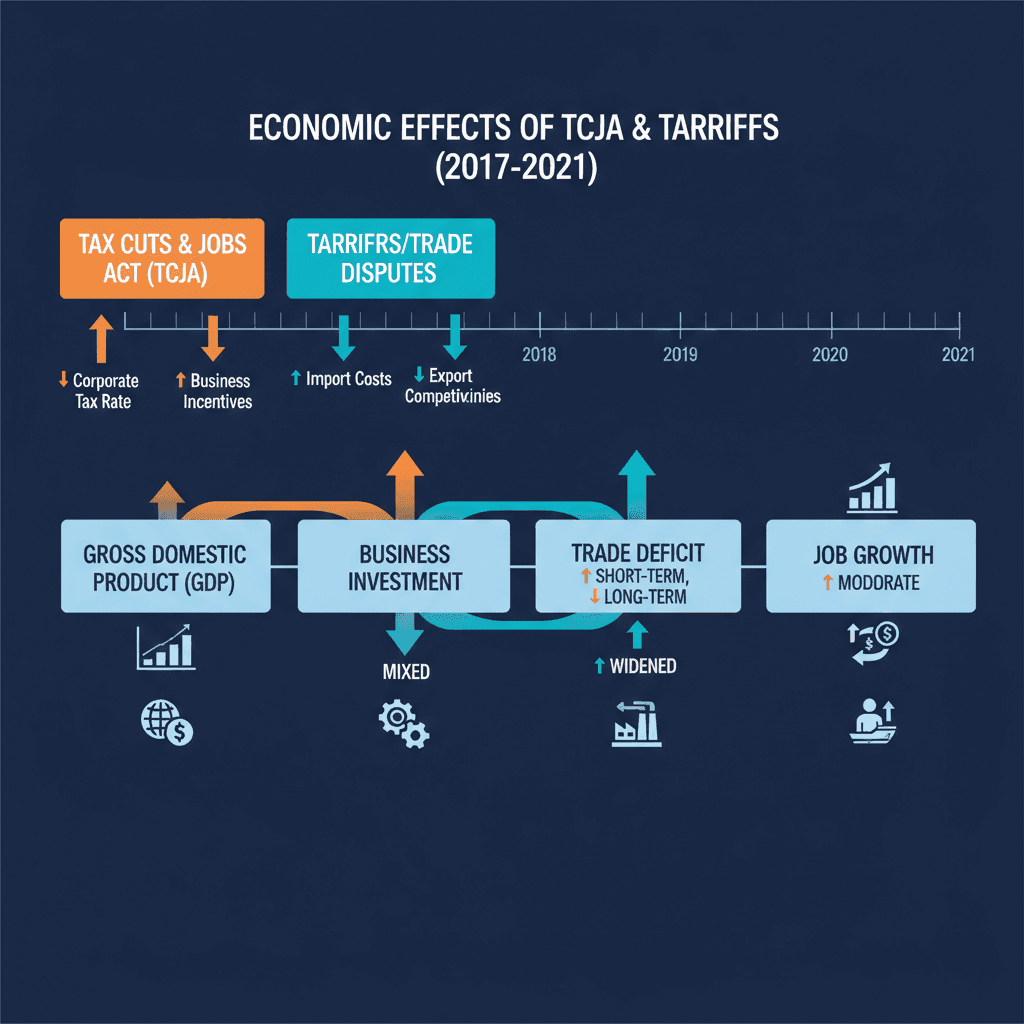
Infographic showing TCJA tax cuts and trump tariffs impact on US growth, jobs, and federal deficit.
America First, New Alliances, and Global Tensions
The trump presidency impact extended well beyond the economy. His 'America First' doctrine quickly transformed US foreign policy. Alliances became more transactional. NATO partners were pressured to increase defense spending, and traditional diplomacy gave way to blunt negotiation.
The trump administration’s stance on China marked a new era of competition. The trump china trade war was not only about tariffs but also about technological rivalry. Restrictions on companies like Huawei and TikTok signaled the start of a digital cold war.
US-China, Trade, and Technology
- Tariffs affected over $360 billion in Chinese goods
- China retaliated by targeting US agriculture and manufacturing
- The US blacklisted Chinese tech firms to limit their access to 5G and AI technology
Meanwhile, the US withdrew from treaties like the Trans-Pacific Partnership and prioritized bilateral deals, including the revised USMCA agreement with Canada and Mexico.
The Trump Administration’s Lasting Domestic Impact
Beyond the headlines, the trump presidency impact was felt throughout American business, regulation, and the judiciary. The trump administration rolled back environmental and business regulations, arguing this would encourage growth. More than 100 major federal rules were weakened or reversed, affecting areas from climate policy to banking oversight.
Key Regulatory and Judicial Actions
- Environmental standards for emissions, water, and land were loosened
- Banking regulations, especially the Dodd-Frank Act, were relaxed for mid-sized banks
- Three Supreme Court justices were appointed, shifting the Court’s balance for decades
While some businesses benefited from less regulation, concerns about long-term environmental and financial stability remain.
Project 2025, Trump 2024, and What Lies Ahead
As Donald Trump considers another run in 2024, the policy blueprint known as Project 2025 is attracting attention. It proposes sweeping changes, including more tariffs, stricter immigration policies, and greater executive power. Supporters see this as a plan to restore American strength, while critics warn it could deepen polarization and create more global instability.
Actionable Takeaways for Business and Policy
- Monitor potential tariffs and supply chain policies if trump 2024 becomes reality
- Prepare for regulatory changes, especially in energy, technology, and finance
- Watch for shifts in global alliances and trade agreements
How to Prepare for Shifting Policy
For executives, policymakers, and investors, the trump presidency impact offers important lessons and strategic considerations.
Practical Steps
- Diversify supply chains to reduce exposure to tariff risks
- Reassess compliance strategies for evolving regulations
- Track policy developments related to Project 2025 and trump 2024
What This Means for You
The story of the trump presidency impact is still unfolding. Whether or not Trump returns to office, the economic and geopolitical effects will continue for years. The challenge, and opportunity, lies in understanding the changing playbook and staying adaptable as America’s role in the world evolves.