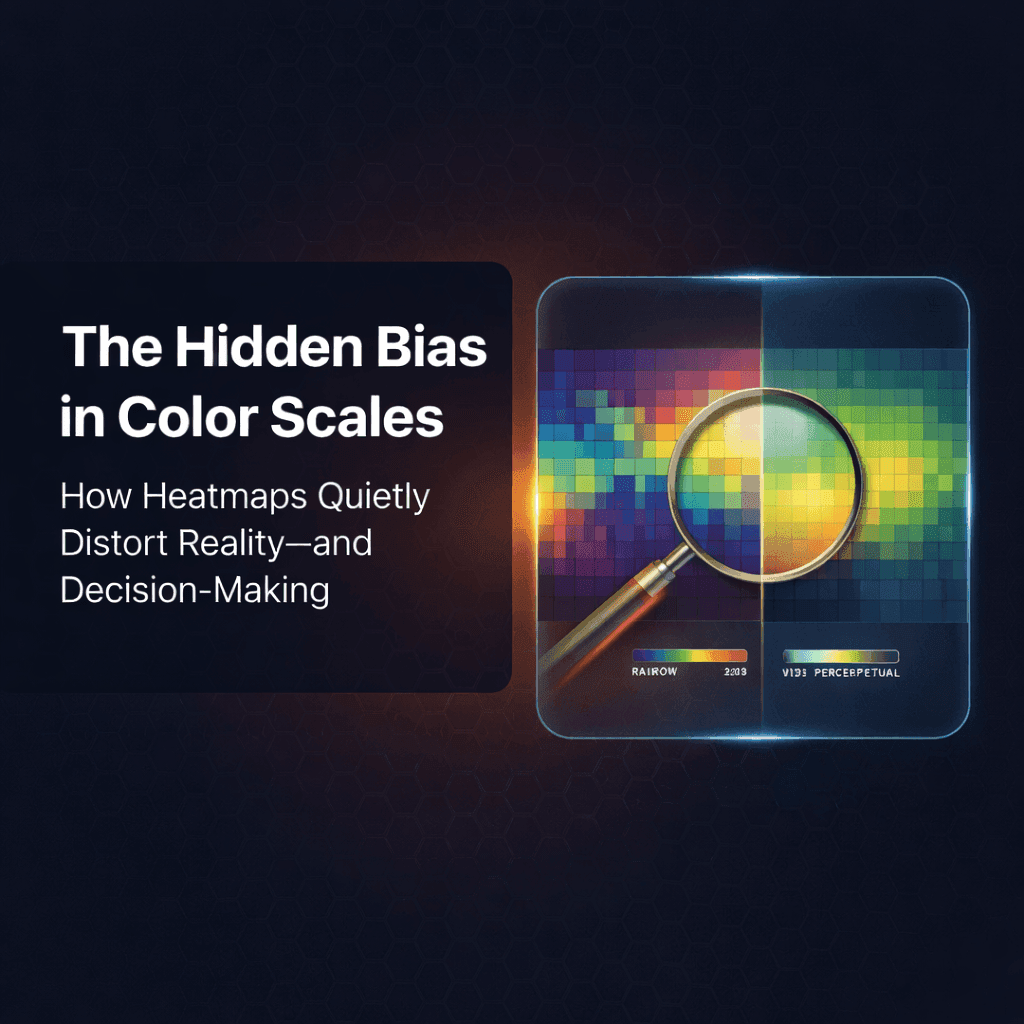
How Heatmaps Quietly Distort Perception, and Decision-Making
Color is not cosmetic in data visualization.
It is a cognitive encoding system.
When that system is poorly designed, it does not merely reduce clarity. It alters interpretation, sometimes materially.
Heatmaps are widely used in epidemiology, financial dashboards, climate science, urban analytics, and medical imaging. They compress multidimensional information into color gradients that appear quantitative and precise.
But most commonly used color scales are not perceptually uniform. And that matters.
The Perceptual Problem: Equal Data ≠ Equal Perception
Human visual sensitivity is dominated by luminance (lightness), not hue.
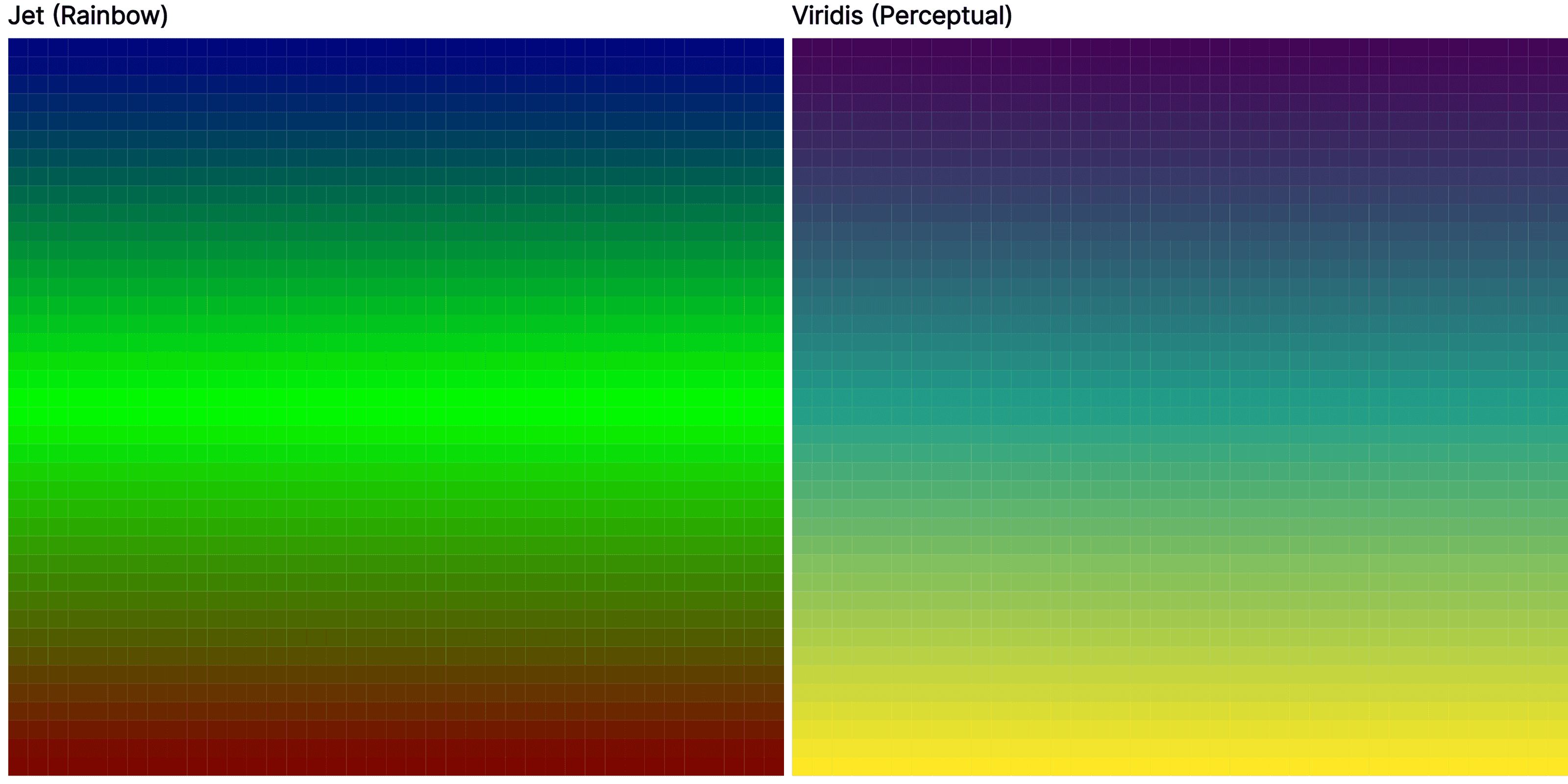
Many popular palettes, especially rainbow (jet) gradients, vary both hue and luminance irregularly. As a result:
- A data change from 40 → 50 may appear larger than 70 → 80.
- Artificial boundaries appear where hue shifts sharply (e.g., green → yellow).
- Smooth gradients are perceived as segmented bands.
In controlled medical imaging experiments, replacing rainbow palettes with perceptually ordered sequential palettes increased diagnostic accuracy from ~50% to ~81% in specific cardiac detection tasks.
The underlying data was identical.
Only the colormap changed.
That delta is not aesthetic.
It is clinical.
Media Case Study: When Maps Inflate Risk
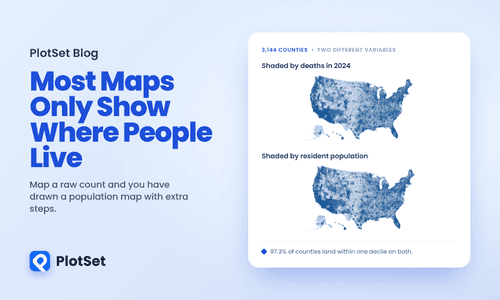
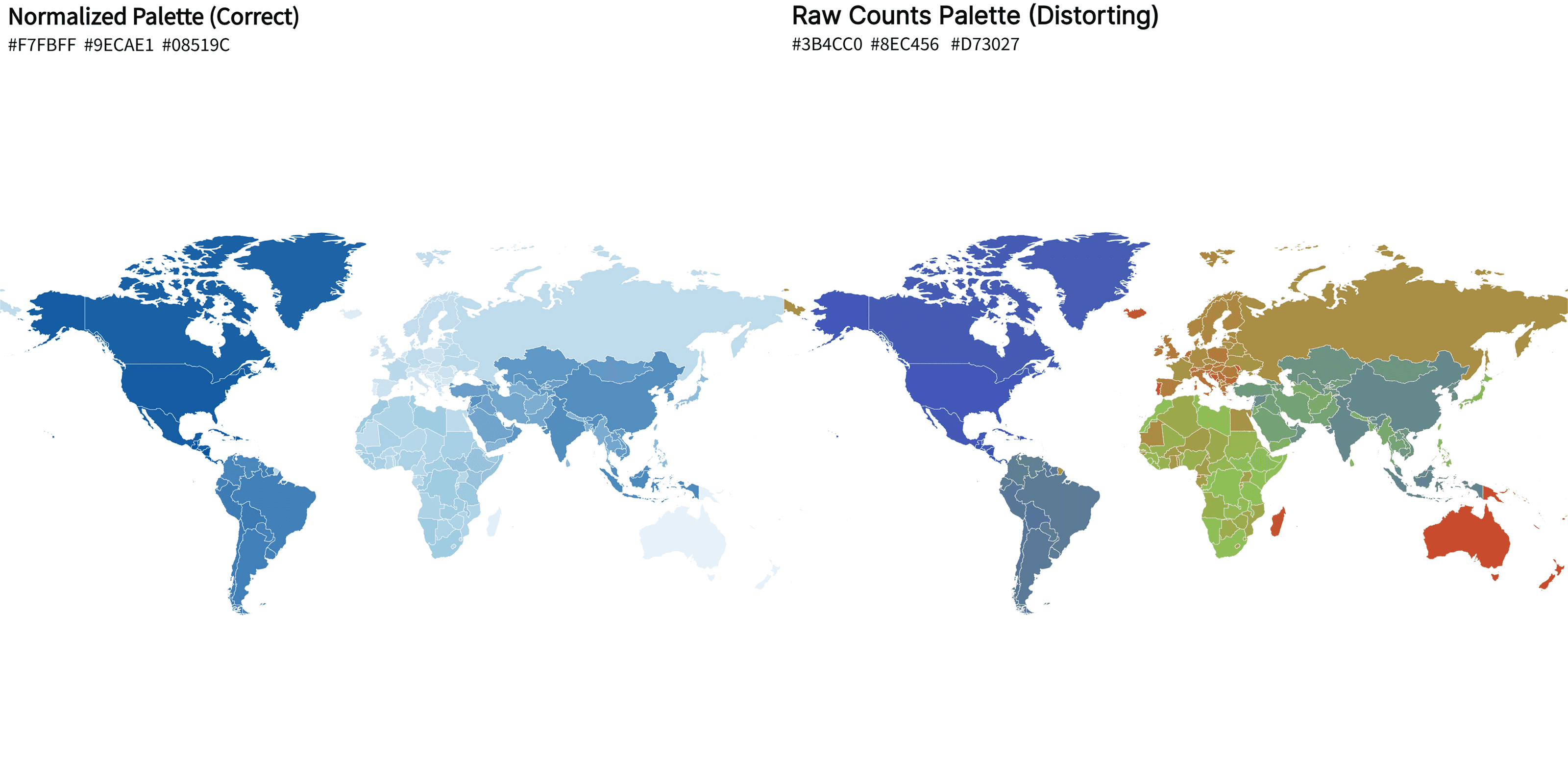
During COVID-19 coverage, numerous dashboards visualized raw case counts using multi-hue color scales.
Small rural counties with relatively few cases appeared visually intense due to sharp hue transitions, while dense urban centers with far greater per-capita impact appeared comparatively muted.
When the same data is:
- Normalized per capita, and
- Rendered with a luminance-ordered sequential palette
the visual emphasis shifts dramatically.
The change is not ideological.
It is mathematical.
And yet public perception tracks the visualization, not the normalization footnote.
Finance: Color Alters Risk Behavior
Behavioral finance experiments demonstrate that color framing changes investment decisions.
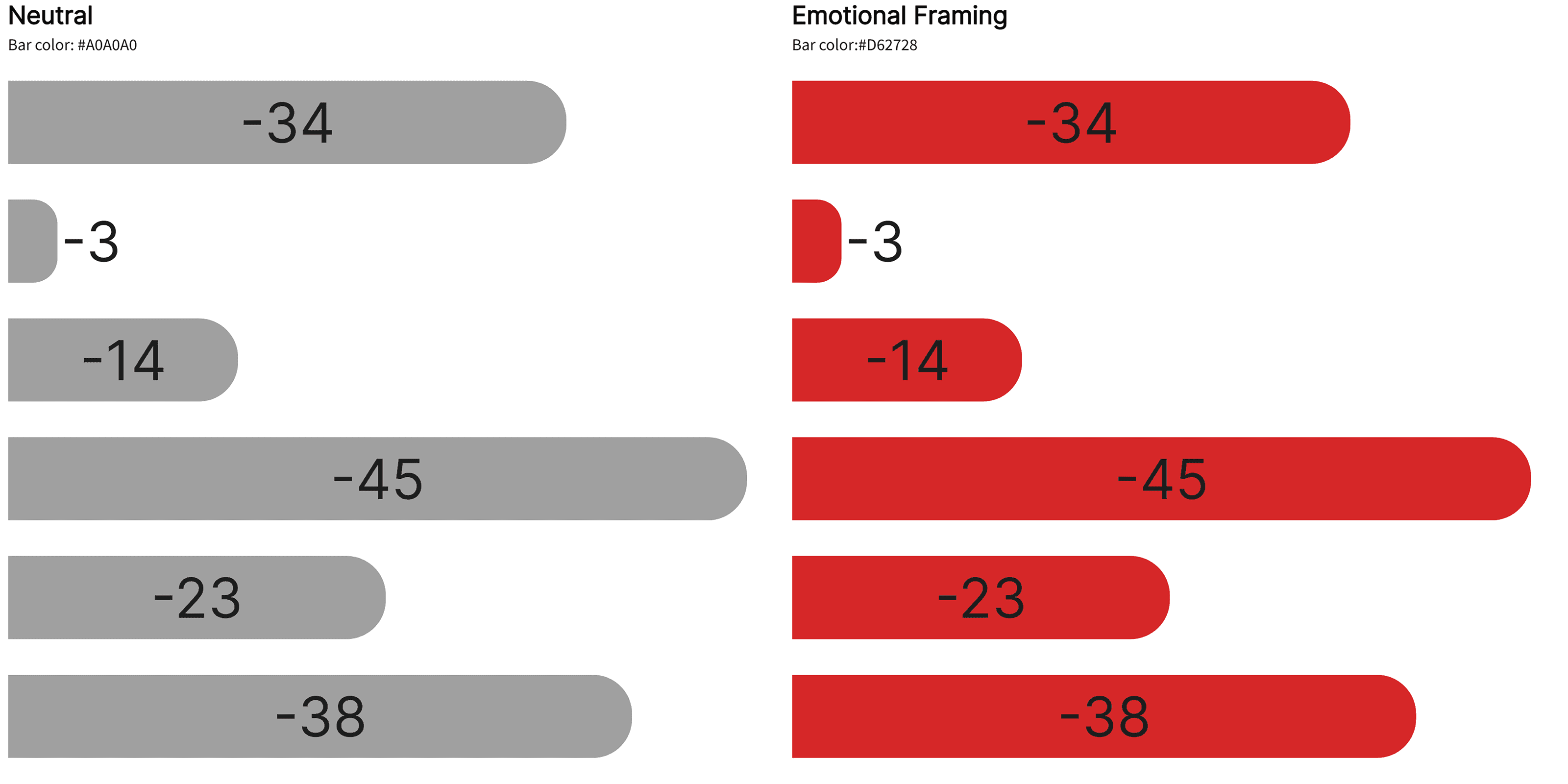
When identical financial losses are displayed in red instead of neutral black or blue, participants exhibit 15–30% lower risk tolerance in subsequent investment choices.
No numbers change.
The color does.
Red activates semantic associations: danger, decline, stop.
This is not a design preference.
It is a behavioral lever embedded in dashboards used by millions.
The Algorithmic Layer: Where Tools Encode Bias
The distortion is not only perceptual. It is computational.
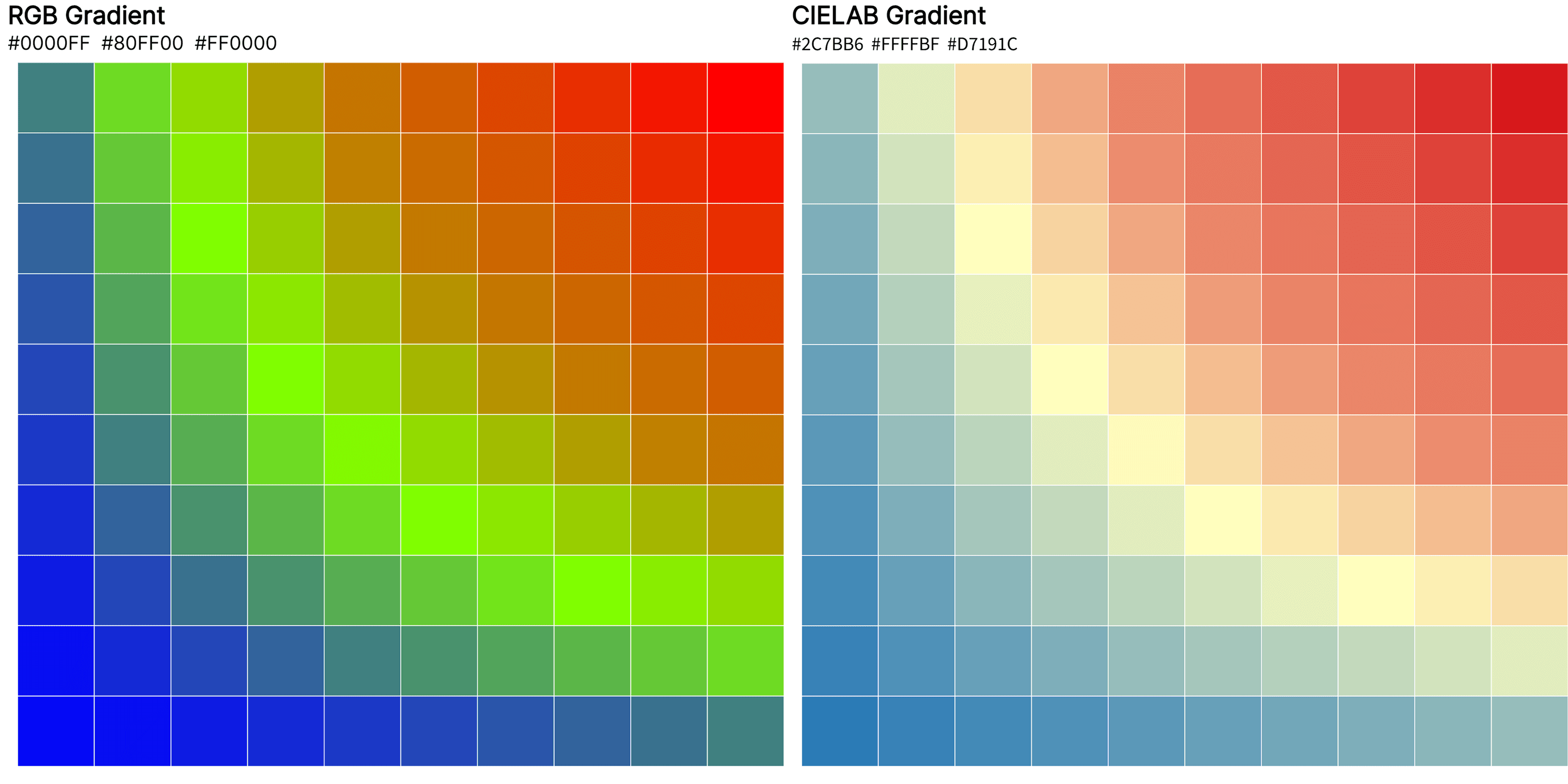
Many visualization systems historically interpolate colors in RGB or HSL space, which are not perceptually uniform.
In RGB interpolation:
-
Equal numeric steps do not correspond to equal perceived lightness.
-
Midpoints can appear disproportionately emphasized.
-
Extremes can be visually compressed.
Perceptual uniformity requires interpolation in color spaces such as CIELAB, where equal ΔE distances approximate equal perceptual change.
Without this correction:
A linear dataset can appear nonlinear.
Additionally:
-
Quantile scaling vs linear scaling changes cluster salience.
-
Automatic domain clipping can suppress outliers.
-
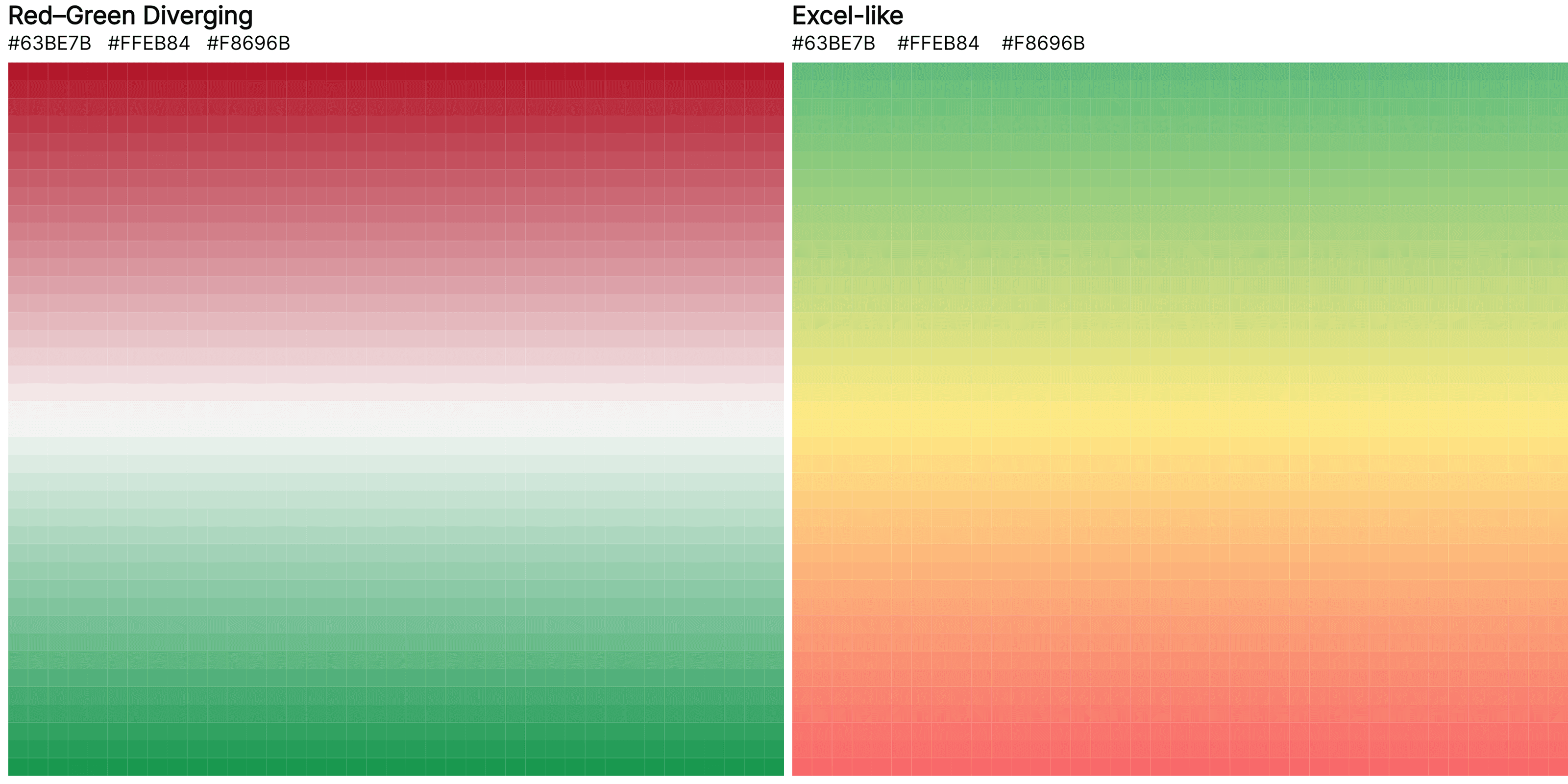
Diverging palettes centered incorrectly (not at zero or a meaningful baseline) can distort magnitude symmetry.
Defaults matter because most users never override them.
Invisible defaults become systemic bias.
Accessibility: Structural Exclusion
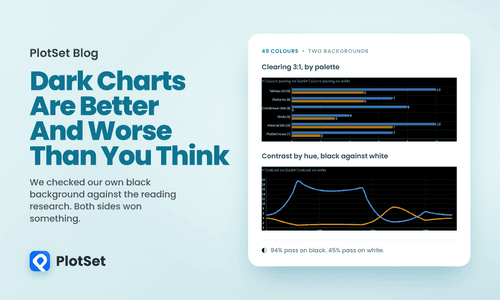
Approximately 8% of men have red–green color vision deficiency.
A red–green diverging heatmap is unreadable to them.
Beyond accessibility, rainbow palettes compress mid-range contrast even for fully sighted viewers, reducing discrimination accuracy in critical value ranges.
If part of your audience cannot decode your visualization, the visualization is incomplete.
If most of your audience misperceives gradients, the visualization is unstable.
Capital Allocation and Policy Implications
Visualization is not passive.
Heatmaps inform:
-
Public health interventions
-
Infrastructure investment
-
Market capital flows
-
Environmental policy
If color exaggerates volatility, suppresses variance, or highlights noise as signal, decision-makers allocate resources accordingly.
The risk is not that a chart is “ugly.”
The risk is capital misallocation driven by perceptual distortion.
Color becomes an upstream variable in economic systems.
Structural Rules for Honest Heatmaps
-
Use perceptually uniform sequential palettes for continuous data.
-
Use diverging palettes only when a meaningful midpoint exists.
-
Ensure luminance increases monotonically.
-
Normalize appropriately (per capita, per area, per base unit).
-
Make scale boundaries explicit and numerically labeled.
-
Test colorblind accessibility.
-
Avoid semantic manipulation (e.g., red/green framing) unless analytically justified.
These are not stylistic preferences.
They are error-control mechanisms.
Conclusion
A heatmap is a compression algorithm between numerical structure and human cognition.
If that compression distorts luminance, exaggerates hue transitions, or embeds semantic bias, interpretation shifts — even when the data does not.
If interpretation shifts when you change only the color, the information was never stable.
Color is not decoration.
It is infrastructure.