How AI is Revolutionizing Data Visualization for Modern Analytics

Introduction
In today's rapidly evolving digital landscape, the sheer volume and complexity of data generated every moment is staggering. Organizations, from small startups to global enterprises, are seeking innovative ways to harness this data for actionable insights. However, traditional data visualization methods are struggling to keep pace with the speed and scale of modern datasets. Enter Artificial Intelligence (AI) — a transformative force that is redefining how we visualize, interpret, and interact with data.
AI-powered data visualization tools are no longer confined to static charts and dashboards. Instead, they are ushering in a new era where visual analytics are smarter, more adaptive, and deeply interactive. By leveraging machine learning algorithms, natural language processing, and advanced automation, these tools can uncover hidden patterns, predict trends, and personalize visual outputs to user needs. This revolution is not just about making charts prettier; it's about empowering decision-makers with real-time, context-aware insights that drive growth and innovation.
The impact of AI on data visualization extends across industries. Healthcare providers are detecting anomalies in patient data faster. Financial analysts are spotting market shifts with unprecedented accuracy. Marketers are understanding customer behavior at a granular level. And business leaders are making data-driven decisions in minutes, not days. As AI technologies mature, the boundary between data analysis and visualization continues to blur, creating immersive experiences that foster deeper understanding and collaboration.
In this comprehensive blog post, we'll explore how AI is transforming data visualization in three key areas: automating data discovery, enabling intelligent storytelling, and enhancing user interaction. Along the way, we'll examine real-world applications, key benefits, and potential challenges, painting a complete picture of the AI-powered future of visual analytics.
Automating Data Discovery: Turning Raw Data Into Instant Insights
The traditional approach to data visualization often requires extensive manual effort. Data scientists and analysts must clean datasets, select relevant variables, choose appropriate chart types, and iterate through multiple visualizations before uncovering valuable insights. This process, though effective, is time-consuming and prone to human bias. AI-driven automation is fundamentally changing this paradigm by enabling rapid, unbiased, and comprehensive data exploration.
How AI Automates Data Discovery
AI-powered tools can ingest raw, unstructured data from multiple sources and automatically identify relationships, anomalies, and trends. Using machine learning algorithms such as clustering, classification, and regression, these platforms surface meaningful patterns that might otherwise go unnoticed. For example, AI can:
- Detect outliers in financial transactions, flagging potential fraud
- Group customer segments based on behavioral similarities
- Identify correlations between operational factors and business outcomes
Data scientists no longer need to painstakingly test every hypothesis. Instead, AI algorithms scan vast datasets at lightning speed, highlighting the most significant findings and recommending relevant visualizations. This frees analysts to focus on strategy and interpretation, rather than data wrangling.
Smart Chart Recommendations and Dynamic Dashboards
A major breakthrough in AI-driven visualization is the ability to recommend optimal chart types for any given dataset. Advanced platforms analyze the data structure, intent, and context, then suggest visualizations—bar charts, scatter plots, heat maps, and more—that best communicate the underlying story. This ensures that even non-experts can create compelling, accurate visuals without deep technical knowledge.
Moreover, AI enables dynamic dashboards that update in real-time as new data streams in. These dashboards use predictive analytics to anticipate user questions and surface relevant metrics proactively. Imagine a sales dashboard that not only shows current performance, but also predicts future trends and highlights emerging opportunities—all without manual intervention.
Benefits of Automated Data Discovery
The automation of data discovery with AI brings several key advantages:
- Speed: Insights are delivered in seconds, not hours or days.
- Scalability: AI can analyze enormous datasets far beyond human capacity.
- Objectivity: Reduces human bias by providing data-driven recommendations.
- Accessibility: Empowers non-technical users to explore data visually and intuitively.
By automating the data discovery process, AI democratizes access to powerful analytics, enabling organizations of all sizes to make smarter, faster decisions.
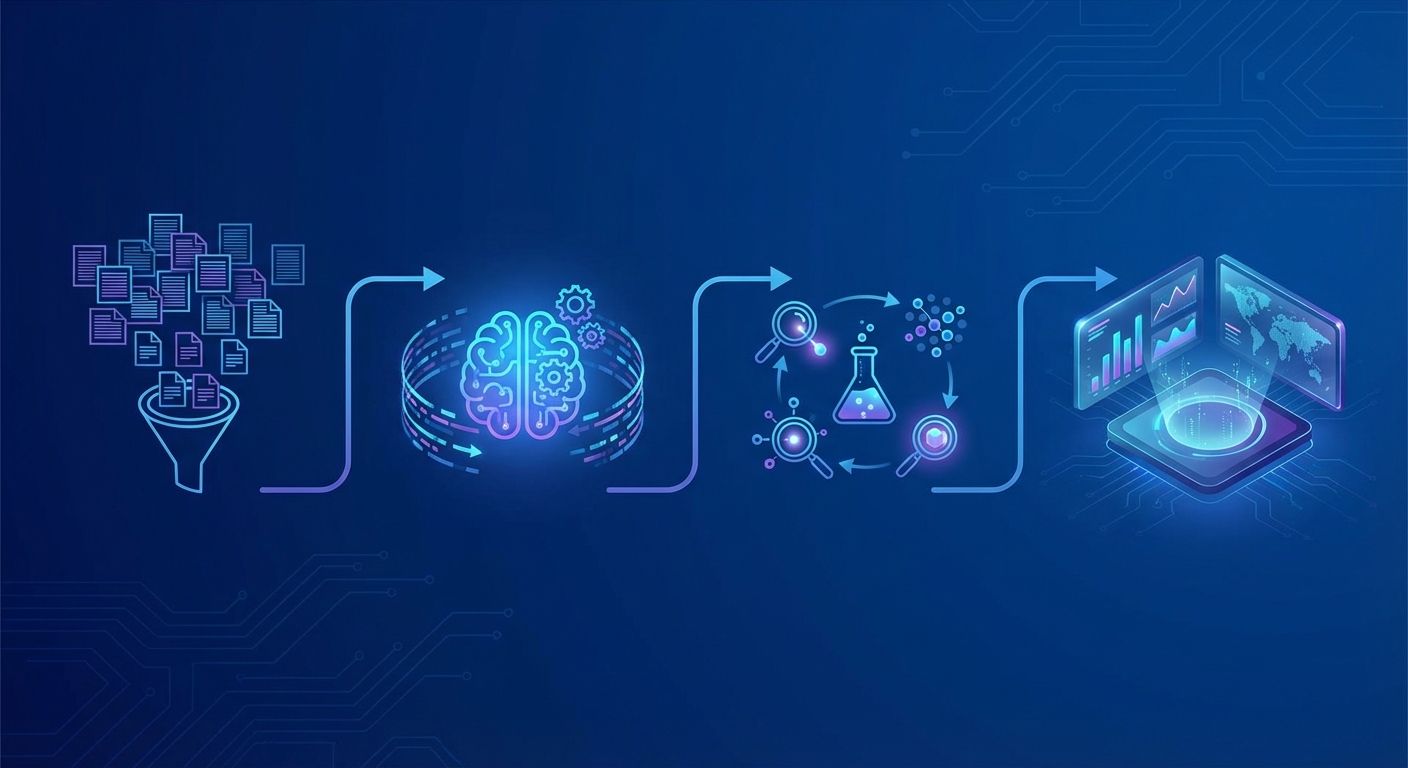
Figure 1: Infographic illustrating how AI automates data discovery, transforming raw data into actionable insights through intelligent analysis and visualization.
Intelligent Storytelling: From Data to Narrative
While charts and graphs are valuable, the true power of data visualization lies in its ability to tell compelling stories. AI is now playing a pivotal role in bridging the gap between raw data and human understanding by enabling intelligent, narrative-driven visualizations.
Natural Language Generation and Data Narratives
One of the most exciting applications of AI in this space is Natural Language Generation (NLG). Advanced systems can automatically generate written summaries, contextual explanations, and actionable recommendations based on visualized data. For example, instead of simply presenting a sales dip in a line chart, AI can generate a narrative: "Sales decreased by 12% in Q2, primarily due to lower performance in the North region."
This contextual storytelling is especially valuable for decision-makers who may not have a background in data science. By pairing visuals with easy-to-understand narratives, AI makes complex analytics accessible to everyone in the organization, fostering a culture of data-driven decision-making.
Personalization and Adaptive Visualizations
AI-driven platforms increasingly offer personalized visualization experiences. By analyzing user roles, preferences, and past interactions, these systems can tailor dashboards and reports to individual needs. A marketing manager might see campaign performance metrics, while a CFO views financial KPIs—all derived from the same underlying dataset but presented in the most relevant format.
Moreover, AI can adapt visualizations in real-time based on user queries and interactions. Through natural language interfaces (like chatbots or voice assistants), users can ask complex data questions—"Show me customer churn by region over the last 12 months"—and receive dynamic, customized visuals paired with narrative insights.
Enhancing Engagement and Retention
Intelligent storytelling not only makes analytics more accessible but also more engaging. Interactive, narrative-driven dashboards encourage exploration and discovery, increasing user retention and satisfaction. As AI continues to evolve, we can expect even richer, more immersive storytelling experiences that blend visuals, text, and even audio for maximum impact.
Key Benefits:
- Democratizes insights through natural language narratives
- Personalizes visualizations for different users and use cases
- Boosts engagement with interactive, adaptive storytelling
Enhanced User Interaction: The Rise of Conversational and Augmented Analytics
The next frontier in data visualization is enhanced user interaction, where AI enables more intuitive and immersive ways to explore and present data. This shift is making analytics platforms more accessible, flexible, and powerful than ever before.
Conversational Analytics: Talking With Your Data
AI-powered conversational interfaces—such as chatbots and voice assistants—allow users to interact with data using natural language. Instead of navigating complex menus or writing SQL queries, users can simply ask, "What were last quarter's top-selling products?" The AI parses the request, retrieves the relevant data, and presents it as a visualization, often accompanied by a narrative explanation. This approach not only saves time but also opens data exploration to a broader audience.
Augmented Analytics and Predictive Insights
Augmented analytics refers to the use of AI to automate data preparation, insight discovery, and sharing. These systems can:
- Recommend next-best actions based on predictive models
- Alert users to anomalies or opportunities in real time
- Surface hidden correlations and drivers behind key metrics
By embedding AI directly into analytics workflows, organizations can move from descriptive to predictive and prescriptive analytics, enhancing strategic decision-making.
Visual Exploration and Immersive Experiences
AI is also powering new forms of immersive data visualization, such as augmented reality (AR) and virtual reality (VR). These technologies enable users to interact with complex datasets in three-dimensional space, uncovering patterns and relationships that might be missed in traditional two-dimensional charts.
Overcoming Usability Barriers
Despite these advances, user adoption remains a key challenge. Successful AI-powered platforms must balance sophistication with simplicity, ensuring that even non-technical users can gain value. This requires intuitive design, clear guidance, and robust support for a wide range of data literacy levels.
The Bottom Line:
- Conversational interfaces make data querying accessible to all
- Augmented analytics provides proactive, actionable insights
- Immersive visualizations unlock new ways of understanding complex data
Conclusion
The integration of AI into data visualization is not just a technological upgrade—it’s a fundamental shift in how organizations understand and act on information. By automating data discovery, enabling intelligent storytelling, and enhancing user interaction, AI-driven tools are breaking down barriers to insight and making analytics more accessible, actionable, and engaging than ever before.
As we look ahead, the possibilities are vast. From real-time predictive dashboards to immersive, interactive analytics experiences, AI will continue to push the boundaries of what’s possible in data visualization. However, organizations must also navigate challenges around data quality, algorithmic transparency, and user adoption to fully realize these benefits.
Ultimately, the future of data visualization will be defined by its ability to make complex information clear, compelling, and actionable for everyone—not just data experts. By embracing AI-powered solutions, businesses can unlock deeper insights, foster collaboration, and drive smarter decisions in our increasingly data-driven world.