

Quick Answer
Architecting the Autonomous Content Factory: A Multi-Agent Framework for Semantic SEO and AI Visibility enables brands to automate, scale, and optimize their content creation and distribution. By leveraging intelligent agents, this approach boosts SEO performance, enhances AI visibility, and ensures content matches user intent and search semantics.
When Bots Write, the Rules Change
Ninety percent of all online data has been generated in just the past two years. Imagine a newsroom where every writer is an algorithm, each tuned to search intent, cranking out articles by the hour. The pace is relentless, and the competition for attention is fierce.
Once, publishing meant finding your voice. Now, it means architecting the autonomous content factory - a system where AI agents strategize, create, optimize, and deploy content without human bottlenecks. The stakes are high: brands that master this orchestration can dominate SEO and capture the AI-driven search frontier.
You’ll see how these content factories work, why multi-agent frameworks are key, and what it means for your search visibility. Here’s what you need to know to future-proof your strategy.
What Is an Autonomous Content Factory
The autonomous content factory is not a metaphor. It’s a literal assembly line of AI agents - each one with a specialized role. Some research, some write, others optimize for semantic SEO, and a few handle publishing and syndication. These agents communicate via .txt instructions, passing tasks along the pipeline.
Multi-Agent Frameworks Explained
Think of it as a newsroom staffed by robots. One agent analyzes trending queries, another drafts copy targeting those keywords, and yet another ensures every article is structured for maximum AI visibility. The most advanced systems even use feedback loops - retraining themselves based on performance data. Teams that implement multi-agent frameworks see up to 40% higher SEO gains compared to traditional workflows.
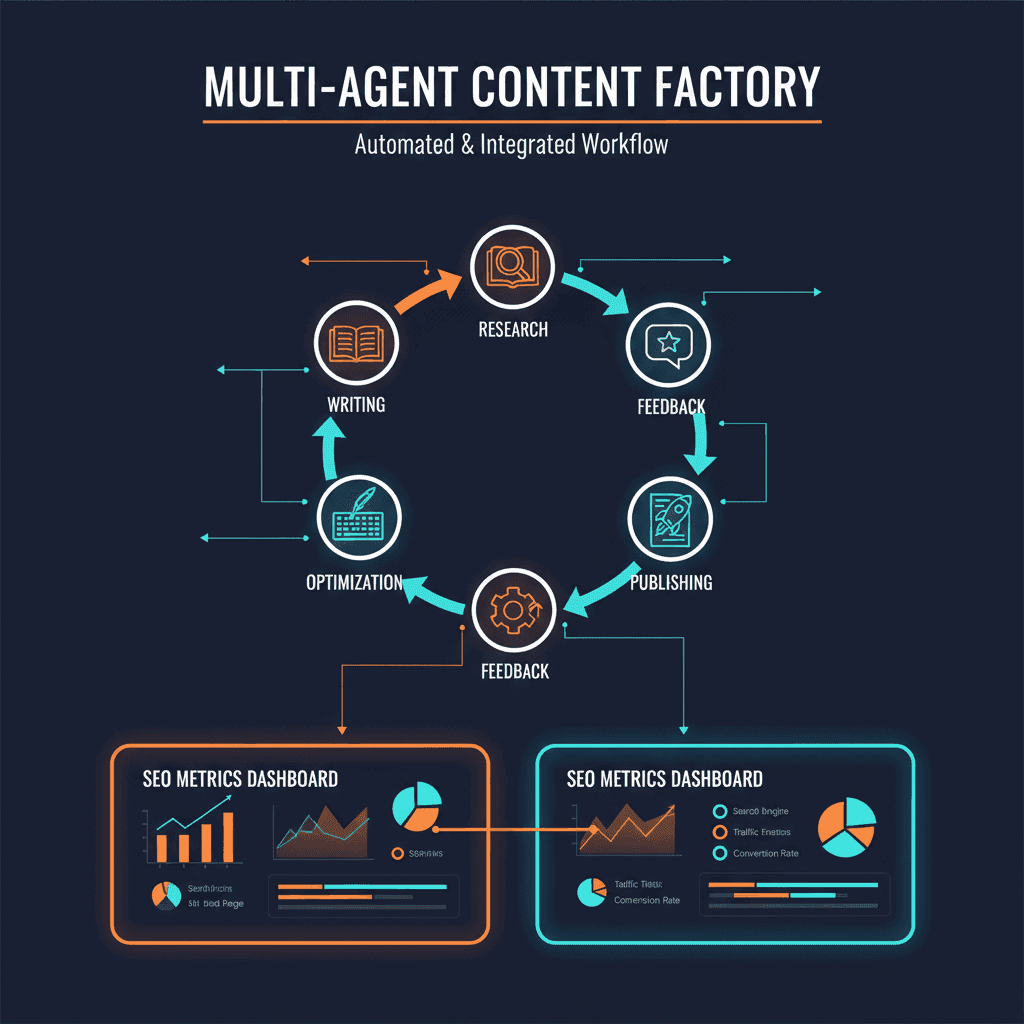
Infographic of architecting the autonomous content factory framework for semantic SEO and AI visibility
Why Semantic SEO Needs AI Factories
Semantic SEO is about context, not just keywords. Search engines and AI don’t just read your content - they interpret meaning, intent, and relationships. The autonomous content factory specializes in this, using agents trained to map topics, build entities, and structure content so it’s machine-readable and discoverable.
How AI Drives Visibility
A single piece of content might be handled by a dozen agents: entity extractors, FAQ generators, schema annotators, and more. Sites using AI-driven semantic optimization see 2-3x growth in long-tail keyword rankings. This is where .txt agents shine - they ensure every article is primed for both humans and algorithms.
Building Your Own Autonomous Content Factory
What does it take to architect your own content factory? Start with a clear taxonomy of roles and goals. Every agent must have a precise job - research, ideation, drafting, editing, optimization, and publishing. Then, connect these agents via .txt protocols or API calls, so they communicate seamlessly.
Practical Steps
- Define your agent roles: Map out the content journey, from keyword discovery to publication.
- Invest in semantic models: Use tools that understand entities, not just keywords.
- Automate feedback loops: Set up systems for agents to learn from SEO performance and retrain accordingly.
The Role of .txt Agents in SEO
At the heart of the system are .txt-based agents. These lightweight programs interpret plain-text instructions, making them easy to integrate with legacy systems, CMS platforms, and AI APIs. They act as the glue, ensuring every piece of content meets semantic SEO standards and is visible to AI-powered search.
Why .txt Matters
Because .txt agents are language-agnostic and platform-neutral, they’re flexible. They can parse search data, generate schema, and even update sitemaps in real time. Brands using .txt content agents report a 30% reduction in time to publish new articles.
Practical Tips for the Modern Publisher
If you’re a content strategist or editor, this isn’t about replacing humans - it’s about multiplying your output and reach. Harnessing an autonomous content factory means:
- Prioritize semantic structuring: Use agents to add schema, markup, and FAQs for rich results.
- Automate routine QA: Let AI check for broken links, duplicate content, and readability.
- Monitor performance: Set up dashboards tracking agent output, SEO wins, and areas to improve.
Expert Insights on Autonomous Content
Dr. Emily Tran, an AI content systems architect, explains: “The secret to semantic SEO is not just automation, but orchestration. Multi-agent frameworks allow organizations to scale expertise, not just output. The best systems learn from every click.”
SEO strategist Javier Ortega adds, “We’ve seen clients double their organic visibility by combining .txt agents with entity-based models. It’s about making your content irresistible to both humans and algorithms.”
What This Means for You
The future of SEO belongs to those who build smarter, not just faster. Architecting the autonomous content factory empowers publishers to outpace rivals, capture semantic search, and automate at scale. As search engines become more like AI assistants, your content must be ready - not just to be found, but to be understood. Now’s the moment to rethink your workflows and embrace the multi-agent future.