The number you will hear today, as the 2026 World Cup kicks off across sixteen North American cities, is eighty billion dollars. It will be on the chyron and in the press release and in the mouth of every mayor who fought to host a match. Eighty billion dollars of economic impact. It is a magnificent number. It is also, in the only sense that matters to an economy the size of America's, a rounding error — and the gap between how it feels and what it is, is one of the most useful lessons in all of data.
The figure comes from a March 2025 study FIFA produced jointly with the World Trade Organization. It projects roughly $80 billion in gross economic impact across the three host countries — the United States, Mexico, and Canada — with about $30.5 billion of that landing inside the United States. That is the headline. The headline is not wrong. It is just standing alone, without the one thing every large number needs to mean anything: something to divide by.
The number shrinks as you ask better questions
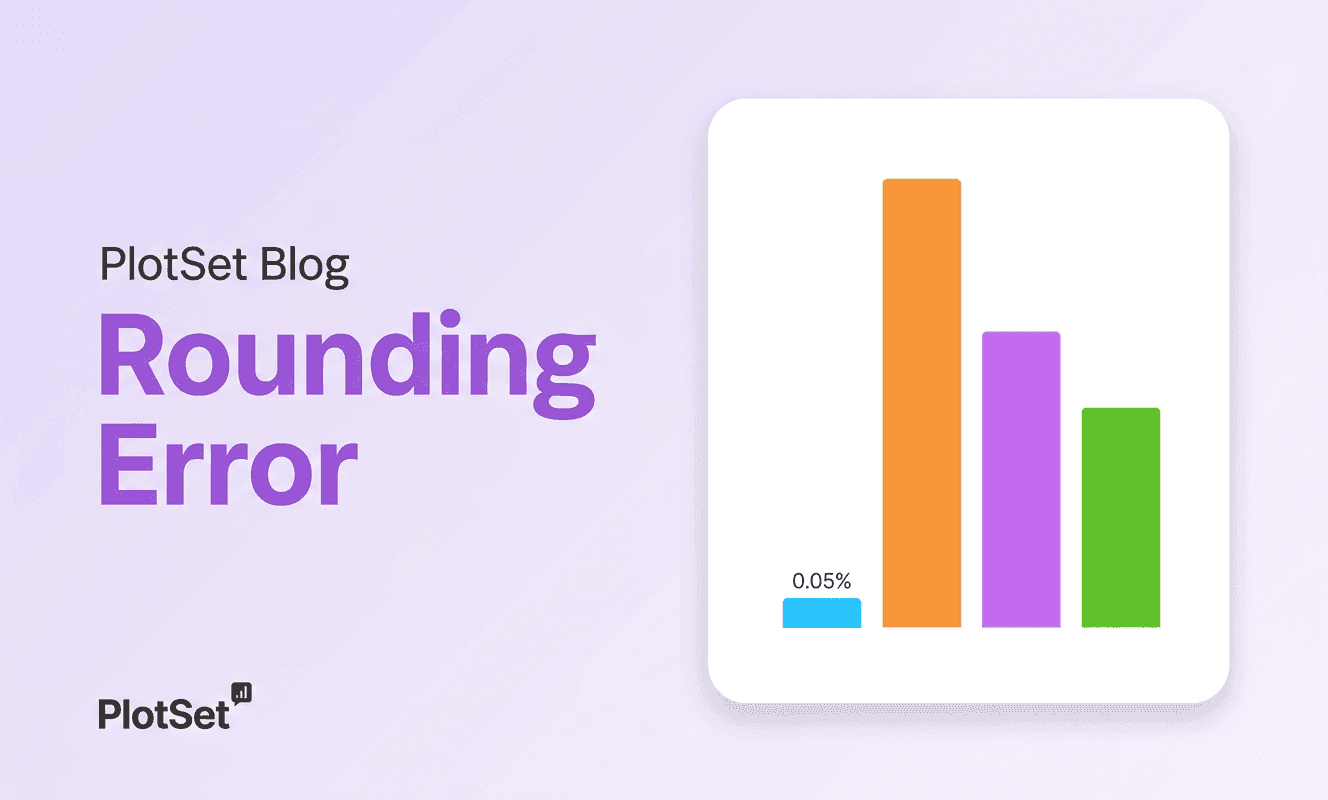
Watch what happens when you do divide. The $30.5 billion figure is gross output — the total churn of spending as money changes hands. But spending is not the same as value created. The same study estimates the actual contribution to US GDP at $17.2 billion. And the United States economy, as of the first quarter of 2026, runs at roughly $31.9 trillion a year. Seventeen-point-two billion over thirty-one-point-nine trillion is 0.05 percent.
Not 5 percent. Not half a percent. Five one-hundredths of one percent. If you earned $80,000 a year, the World Cup's effect on your finances would be about forty dollars — a single dinner, spread across the busiest sporting month your country will see in a generation.
0.05%
The 2026 World Cup's projected contribution to annual US GDP — about $17.2 billion against a ~$31.9 trillion economy. The "$80 billion" headline is the three-country gross figure, a number chosen because it is the largest one that is still technically defensible.
This is not a quirk of soccer. It is the standard shape of every megaproject pitch — Olympics, stadiums, conventions, festivals. The promoted number is always a gross figure, always for the widest possible geography, and always presented without a denominator, because the denominator is where the magic dies.
How the headline shrinks as the claim gets honest
$80B — 3-country gross impact $30.5B — US gross output $17.2B — Actual US GDP contribution Now divide by the economy it lands in US GDP — ~$31.9 trillion / year The World Cup is in here. At true scale the bar would be about one-third of one pixel wide — thinner than the line drawn to mark it.
A number is only as meaningful as the thing you put it over. Strip the denominator and any figure can look enormous.
The same event, three honest numbers, then the only comparison that matters. The top panel narrows the claim from the widest geography to the real value created; the bottom panel sets that value against the economy absorbing it. The contribution is so small that drawing it to scale makes it disappear.
Why gross numbers always overstate
There is a second sleight of hand hiding inside "economic impact," and it has a name economists use with a sigh: the substitution effect. When a family in Dallas spends $400 on World Cup tickets and beer, that money is counted as impact. But much of it would have been spent anyway — on a concert, a restaurant, a weekend trip — just somewhere else in the same economy. Counting it as new activity double-counts dollars that were always going to move.
Then there is crowding out. Host cities fill with soccer fans, but they also repel everyone else: the business traveler who reschedules, the tourist who avoids the congestion and the surge-priced hotel. Some of the visitors a World Cup "brings" simply replace visitors it scared away. Victor Matheson, a sports economist at the College of the Holy Cross who has spent a career auditing these forecasts, puts it plainly: the real impact "is likely to be a fraction of what is being advertised," and pre-event studies "tend to resemble promotional material more than rigorous economic analysis."
A gross figure counts every dollar that moves. A net figure counts only the dollars that would not have moved otherwise. Almost every headline you read is the first kind, dressed as the second.
The independent forecasters agree once they strip the gloss
Goldman Sachs, modeling the tournament against decades of past World Cups, expects a temporary bump — roughly 40,000 added jobs in June, fading to about 10,000 in July, then a 15,000-job drag in August as the temporary roles end. Their estimate of the long-run effect on output is, in their words, "effectively zero." A boost of about 0.1 percentage point to second-quarter growth, handed back as a small drag by the fourth. The party is real. The wealth it leaves behind is not.
The chart-craft lesson is bigger than soccer
None of this means the World Cup is bad, or not worth hosting. Joy, civic pride, and a month of the world watching your cities are real goods that no GDP figure captures — and that is precisely the point. The $80 billion was never measuring those things. It was a number reached for because it was the biggest one available, and big numbers travel. They get screenshotted. They anchor a debate before anyone thinks to ask "out of how much?"
This is the most common way a chart or a statistic misleads without technically lying. Not a doctored axis or a fabricated figure — just a true numerator floating free of any denominator, sized to overwhelm. A city's $1 billion in "activity" sounds transformative until you learn the metro economy is $400 billion. A program's "$50 million in savings" sounds heroic until you see the $9 billion budget. The number is accurate. The framing does the deceiving.
The fix, whether you are reading a number or drawing one, is a single reflex:
Always ask "out of how much?" A number with no denominator is a number with no meaning. Find the whole the part belongs to before you react to the part.
Separate gross from net. "Activity" and "output" count every dollar that moves; "value added" and "GDP contribution" count only what is genuinely new. Headlines prefer the former.
Watch the geography. If a figure spans three countries but the decision is about one city, the number has been inflated by the size of the map.
Draw it to scale. When you chart a part against its whole, resist the urge to "zoom in" so the sliver looks impressive. If the honest bar is invisible, that is the finding.
Name what the number leaves out. Joy, pride, and spectacle are real — they are just not dollars. Don't let a financial figure smuggle in claims it never measured.
Enjoy the tournament. It will be glorious, and the forty-dollars-per-household it adds to the economy is not the reason to watch. Just remember, the next time a number arrives without anything to divide it by, that the missing denominator is rarely an accident. It is the whole trick.
Put your numbers in proportion
PlotSet makes it easy to chart a part against its whole honestly — proportional bars, share-of-total views, and scaled comparisons that show the real size of a number instead of the flattering one. Drop in your data and let the denominator do the talking.
Create a chart free →
Sources & further reading
FIFA & World Trade Organization, "FIFA World Cup 2026 Socioeconomic Impact Analysis" (March 2025) — ~$80B three-country gross impact; ~$30.5B US gross output; ~$17.2B US GDP contribution; ~185,000 FTE jobs. The Business Standard, "How FIFA World Cup 2026 will add $17.2b to US GDP" — $17.2B ≈ 0.05% of US GDP (US GDP ~$31,856B, Q1 2026). Newsweek, "World Cup Tickets Signal Smaller Economic Boom Than Expected" — Victor Matheson on substitution effects, crowding-out, and forecasts as "promotional material." Goldman Sachs (Kevin Daly & Mambuna Njie), via Bloomberg / SGI Europe — +40k payrolls in June, +10k July, −15k drag in August; long-run output effect "effectively zero"; ~+0.1pp Q2 GDP growth. Yahoo Finance / CNBC, "Why World Cup 2026 won't score a big goal for the US economy" (June 2026) — temporary travel and spending boost; limited lasting impact. Statista, "The World Cup Barely Moves the Needle for the U.S. Economy" (2026).